

What is 13 percent more than 700? What is the formula used to calculate 13 percent more than 700? How can we calculate 13 percent more than 700?
Here we will show you the formula used to calculate 13 percent more than 700 (13% more than 700), and then we will calculate the answer to 13 percent more than 700 using our formula. We will also illustrate what 13 percent more than 700 looks like.
The formula used to calculate 13 percent more than 700, as well as other percent more than problems, can be seen below:
PM = ((P ÷ 100) × OV) + OV
PM (Percent More) is the answer we want, P (%) is the percent, and OV (Original Value) is the starting value. Therefore, when we substitute 13 for P and 700 for OV in our formula, we get the answer to 13 percent more than 700, as solved here:
PM = ((13 ÷ 100) × 700) + 700
PM = (0.13 × 700) + 700
PM = 91 + 700
PM = 791
13% more than 700 = 791
So, how does our formula work to calculate 13 percent more than 700? First, it takes 13 percent of 700, and then it adds that result to 700 to get our final answer. Below we have provided an illustration so you can better visualize 13 percent more than 700.
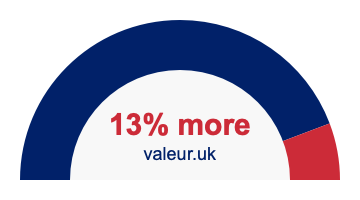
In our illustration above, the area shaded in blue is 700, and the area shaded in red is 13 percent of 700. Therefore, the blue area and the red area together represent 13 percent more than 700. In other words, blue is 700, red is 91, and blue plus red is 791.
Percent More Than Calculator
Please enter a similar problem in the box below and we will solve it for you:
What is 13 percent more than 701?
Here is a similar problem we have explained, calculated and illustrated for you.